Begin with observable impairment.
Describe how the symptoms affect this client's functioning. Use those specific problems to decide what treatment should address.
 Write it RightClinical Documentation Trainingby Therapist Resources
Get the course · $37
Write it RightClinical Documentation Trainingby Therapist Resources
Get the course · $37
Course 2 · Treatment Plans
Learn how to write measurable treatment goals and distinguish them from objectives. Use assessment findings to choose interventions that address the client's needs.
$37Self-paced course · lifetime access · 30-day guarantee
Is this a good fit?
Therapists who want help turning assessment findings into a treatment plan they can use and review with the client.
Study at your own pace in Mini Course Generator. Download the PDFs from Google Drive to use alongside the lessons.
A treatment plan example
Follow one assessment finding as it becomes a goal, an objective the client can act on, and an intervention the clinician can deliver.
Describe how the symptoms affect this client's functioning. Use those specific problems to decide what treatment should address.
Write a goal with an outcome, a way to measure it, and a timeframe. Check that it addresses the symptoms or impairment documented in the assessment.
Use observable actions so you and the client can assess progress toward the objective.
Describe the technique you plan to use and how it supports the objective. In the session note, document the intervention you actually delivered.
The review test
Review whether your objectives and planned interventions address the treatment goals.
The clinical direction should address the functional impact already documented.
An observable action and a defined timeframe help you assess whether the client has met the objective.
Explain how the planned technique supports the objective.
The planned intervention and target should be recognizable in the work delivered later.
Inside the course
Each core module includes a format guide and worked examples using Marcus T. You'll also find writing practice with sample responses for review.
Translate a behavioral definition into a goal that remains connected to diagnosis and functional impairment.
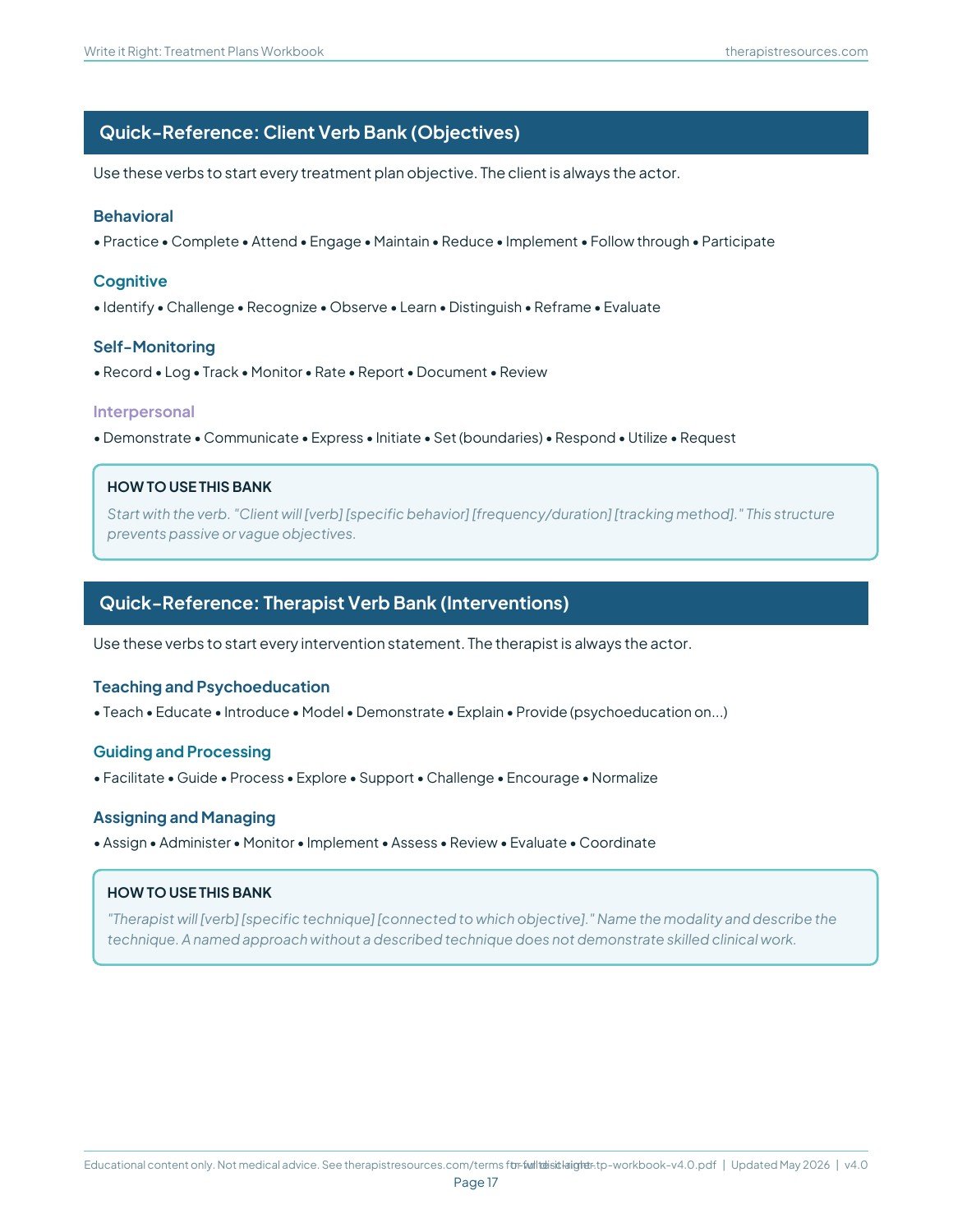
Use observable verbs to describe what the client will do to work toward the goal.
Write specific, modality-based interventions that respond to each objective.
Check that treatment goals address the assessment findings and that session notes document treatment related to those goals.
Adapt the method for multiple diagnoses, plan revisions, high-risk care, and adolescent treatment.
Build a plan for an unfamiliar case, then compare it with the model answer and self-audit.
A look at the actual workbook
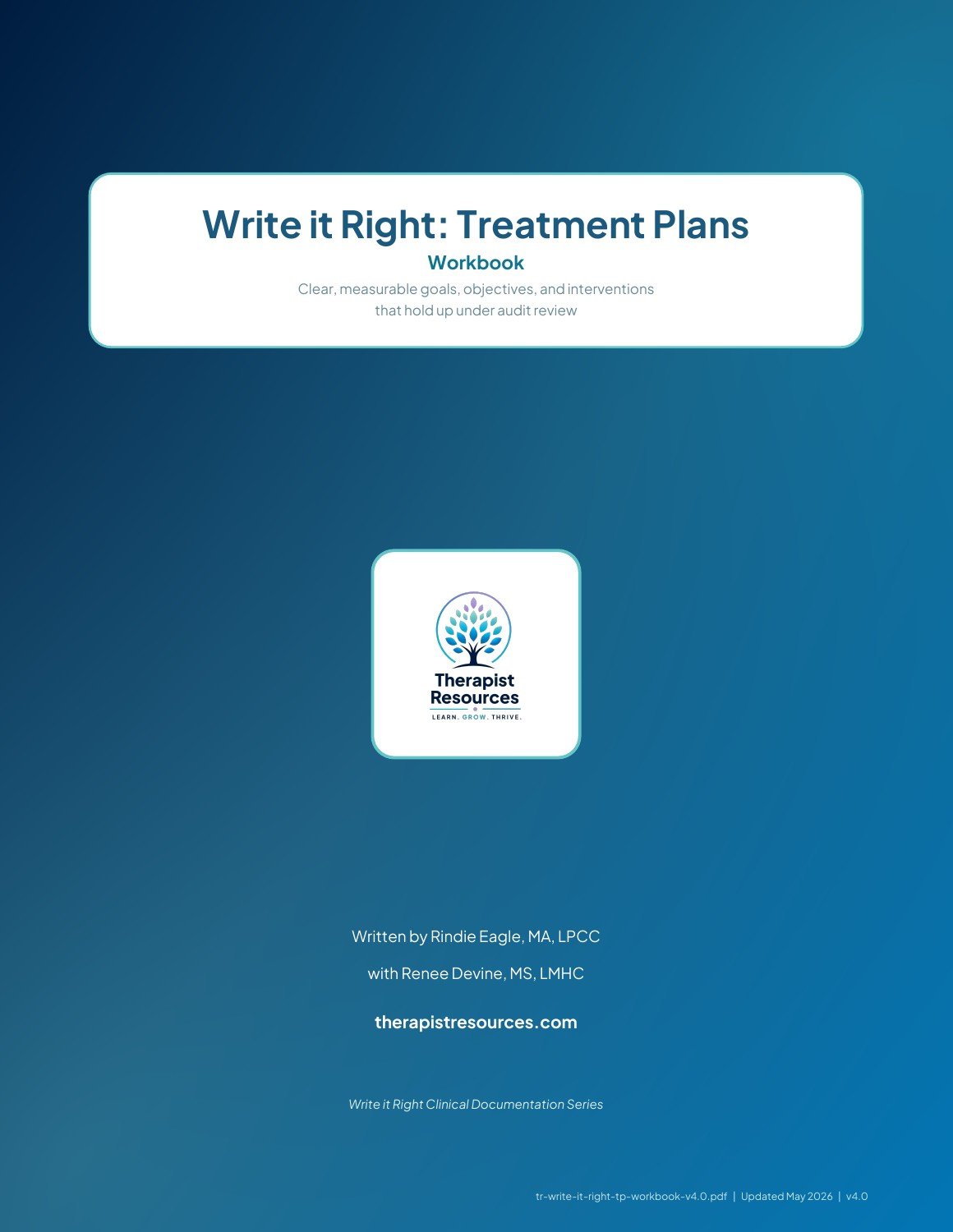
These are pages from the Treatment Plans Workbook PDF included with this course. Select a page to take a closer look.
Work with it
Write a plan for the practice case, then compare your decisions with the model answer.
When the plan changes
The bonus cases and capstone apply the same reasoning beyond a straightforward first plan.
Use the documented response to treatment to revise targets without breaking continuity.
Organize multiple diagnoses and higher-risk care around a plan that remains readable.
Write a complete plan for an unfamiliar case and compare it with the model answer.
Choose what fits
Choose this course for help with treatment planning. The bundle also covers diagnostic assessments, SOAP notes, and documentation at the end of treatment.
The course, workbook, templates, examples, practices, certificate, lifetime access, and 30-day guarantee.
All four courses plus the complete Templates and Examples pack.
Use the plans and completed models without the teaching.
Write it Right: Treatment Plans
Use the examples to review a plan you've written. Can you tell whether the client has met each objective?