
Write it Right

Documentation you can defend. From intake to discharge.

Scroll
01

You give your best to the session. The note gets what's left.

You sit down to chart at the end of the day and do what you can with the energy left. Sometimes you rush. Sometimes you put it off. Underneath both is the same uncertainty: what exactly is supposed to be in there. So when a colleague mentions a record request or an audit, you lie awake wondering if your notes would survive one.

02

Audit-ready is a specific standard you can aim for.

An audit-ready chart is complete and documents medical necessity at every session. Each goal connects directly to the diagnosis. A reviewer can trace a visible line from intake through discharge. You can learn what that standard is and how to meet it. The standard was just never spelled out for you in grad school.

03

What an audit can cost.

Renee's practice received a $630,000 clawback demand. A Special Investigative Unit review followed, then attorneys, then more than a year of pre-approving every note before submission. That experience is one of the reasons we built this series. Documentation protects your license, and it's worth knowing whether yours would hold up before anyone asks to see it.

04

One framework: The Golden Thread.

The Golden Thread links your diagnostic reasoning to the treatment goals, the goals to your interventions, and the interventions to the outcomes you document. Pull one end and the whole record holds. The Write it Right series teaches you to draw that line in every chart you write, to document medical necessity, and to cover the smaller required components that rarely get taught.

05

Four courses follow one client through the full record.

Diagnostic Assessment. Treatment Planning. SOAP Notes. Case Consults, Summaries, and Discharges. Every course follows Marcus, the same client, across the full clinical arc, so you see how the thread holds from first intake through final discharge. Built by Renee Devine, MS, LMHC (the audit above happened to her practice), and Rindie Eagle, MA, LPCC. Start with the foundation, or pick the course that matches where your charts need work.

Explore the Case Files
the golden thread connects every chart ↓ ↘ documentation that holds up

A Documentation Series · Volumes I–IV

Write it right.
Find the golden thread.

Now Enrolling

Four courses built around seven case files. Marcus's chart runs complete from intake to discharge, and the other case files each work through one documentation moment in depth.

written by Rindie Eagle, MA, LPCC
& Renee Devine, MS, LMHC

Scroll

The Golden Thread

Watch one chart hold together

follow Marcus T. from intake to discharge

DA

Course 01 · Diagnostic Assessment

Marcus T., 34 · Intake

Client reports an 8-month history of excessive worry with somatic features, PCP-referred after a negative cardiac workup. Functional impairment documented in observable terms: declined two project presentations, requested a remote-only work accommodation, canceled plans with friends twice in the past month. Treatment is medically necessary to address symptoms of GAD.

TP

Course 02 · Treatment Plans

Marcus T. · Goal 1

Goal 1: Reduce severity of anxiety symptoms as measured by GAD-7 score from 16 (severe), the baseline documented at intake, to below 9 (mild) within 12 weeks.

SOAP

Course 03 · SOAP Notes

Marcus T. · Session 8

P: Goal 1: Reduce GAD-7 from 16 to below 9 within 12 weeks - Progressing (16 to 12). Continue weekly CBT. Homework: one rehearsed Q&A response in the next team meeting, advancing the exposure hierarchy.

CC

Course 04 · Discharge Summary

Marcus T. · Close-out

Goal 1 status: Met. GAD-7 from 16 (severe) at intake to 4 (minimal) at discharge, sustained for four consecutive weeks. The chart reads as one continuous record.

Diagnostic Assessment

An intake gets written.

Marcus walks in with eight months of worry and a negative cardiac workup from his PCP. The diagnostic assessment names the symptoms in DSM language and documents functional impairment in countable, behavioral terms.

↗ the thread starts here

Treatment Plan

The treatment plan carries it forward.

Goal 1 is built from the intake's behavioral definition and attaches a baseline, a target, and a timeframe to it: GAD-7 from 16 to below 9 within 12 weeks. An auditor can lay the two documents side by side and watch the thread carry over.

SOAP Notes

Every session note refers back.

Each note's Plan section lists every goal by number with its status and the evidence behind it. Thirty sessions deep, the chart still reads as one argument, with every note pulling the same thread forward.

Discharge Summary

Discharge closes the loop.

The close-out measures Goal 1 against the baseline the intake captured. "Met" is a clinical judgment backed by thirty sessions of documented progress, and the discharge summary lays that evidence out.

The Golden Thread in Action

One golden thread runs through the whole chart.

The Write it Right series teaches that continuity, course by course, using a complete example you can follow from intake to discharge.

Explore the case files →

The Cast

Open the case files below

seven characters. click any polaroid to open their chart.

↗ runs through every course

The Four Courses

From intake to discharge

COURSE 01 · DA

Diagnostic Assessment

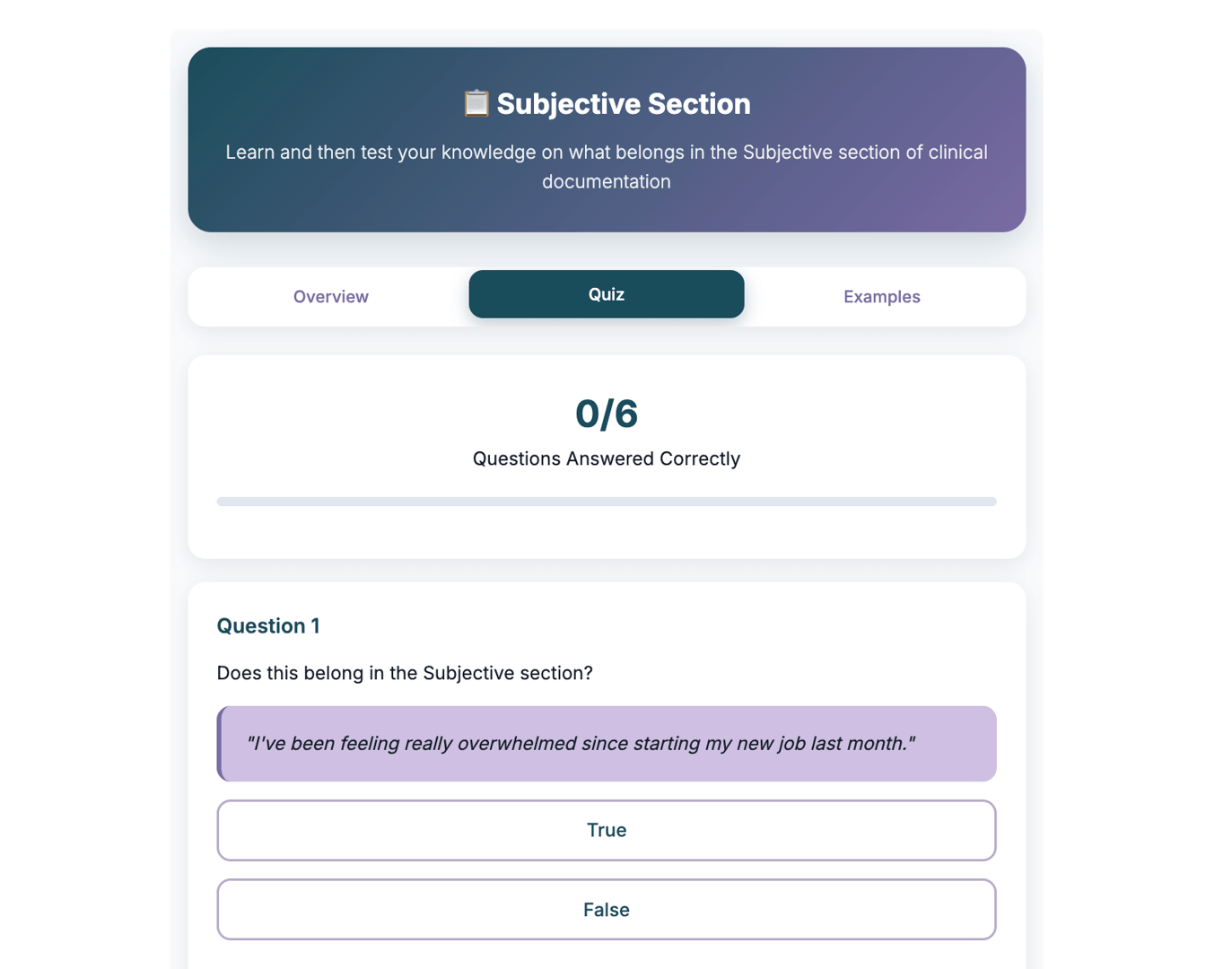
Write intakes that hold up clinically and pass an audit.

MTDRJWZM
Open Course 1 →

COURSE 02 · TP

Treatment Plans

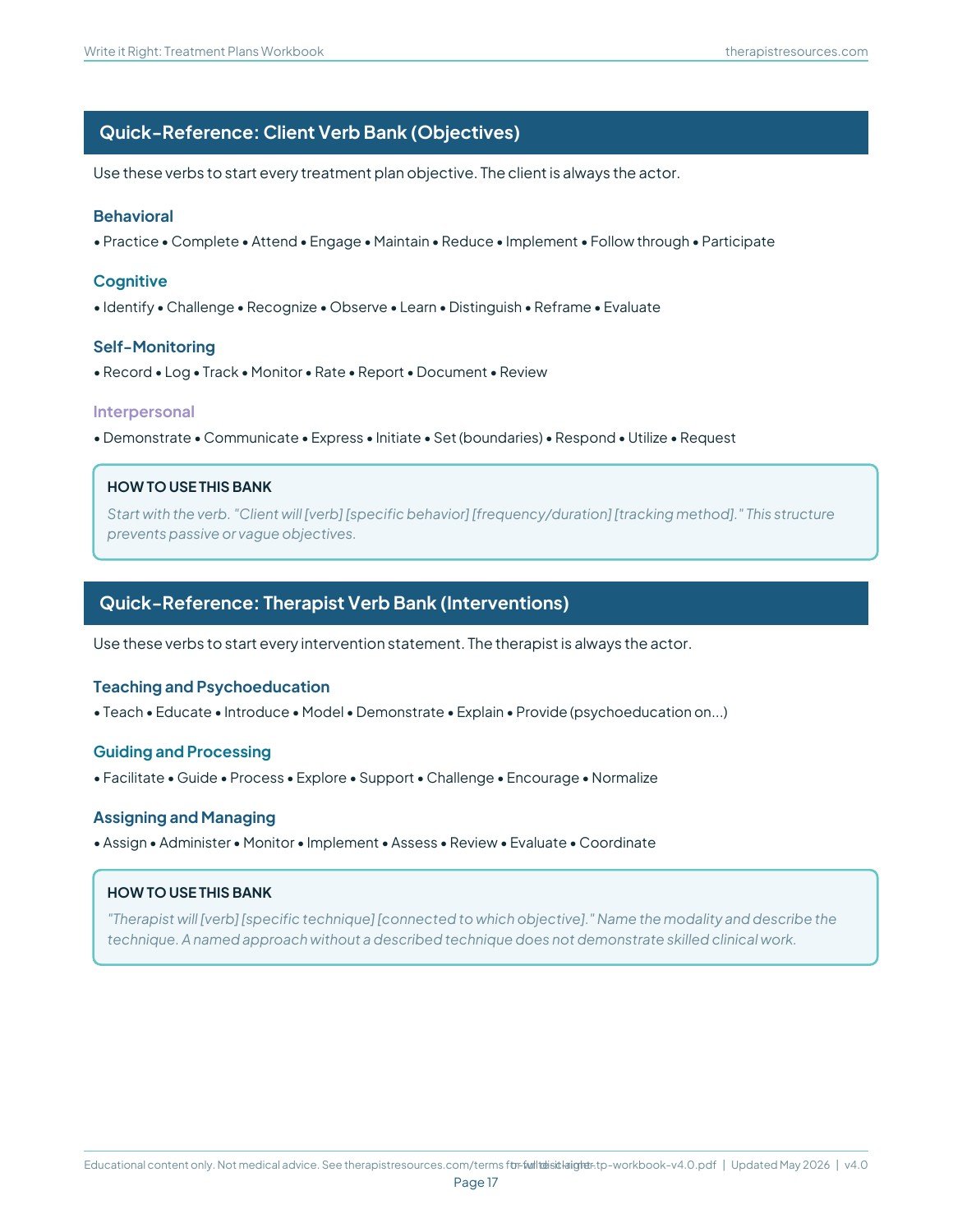
Goals that drive treatment and survive medical-necessity review.

MTDR
Open Course 2 →

COURSE 03 · SOAP

SOAP Notes

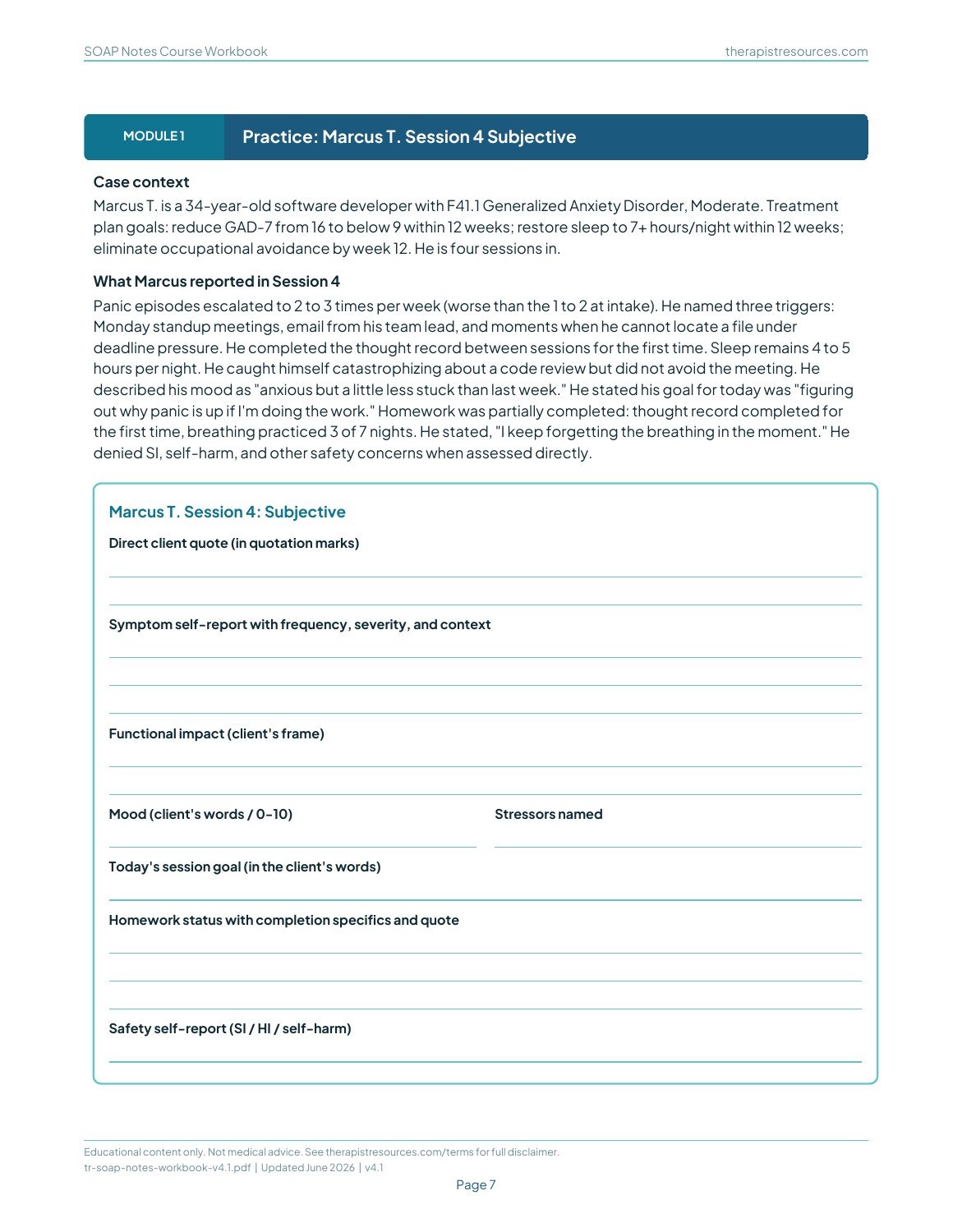
Session notes that tie back to the plan, every time.

MTJKLS
Open Course 3 →

COURSE 04 · CC

Case Consults, Summaries & Discharges

Close cases cleanly, even when they end messy.

MTDR
Open Course 4 →
the thread runs through all four ↓ Bundle all four courses

Enroll

Choose a course, or take all four

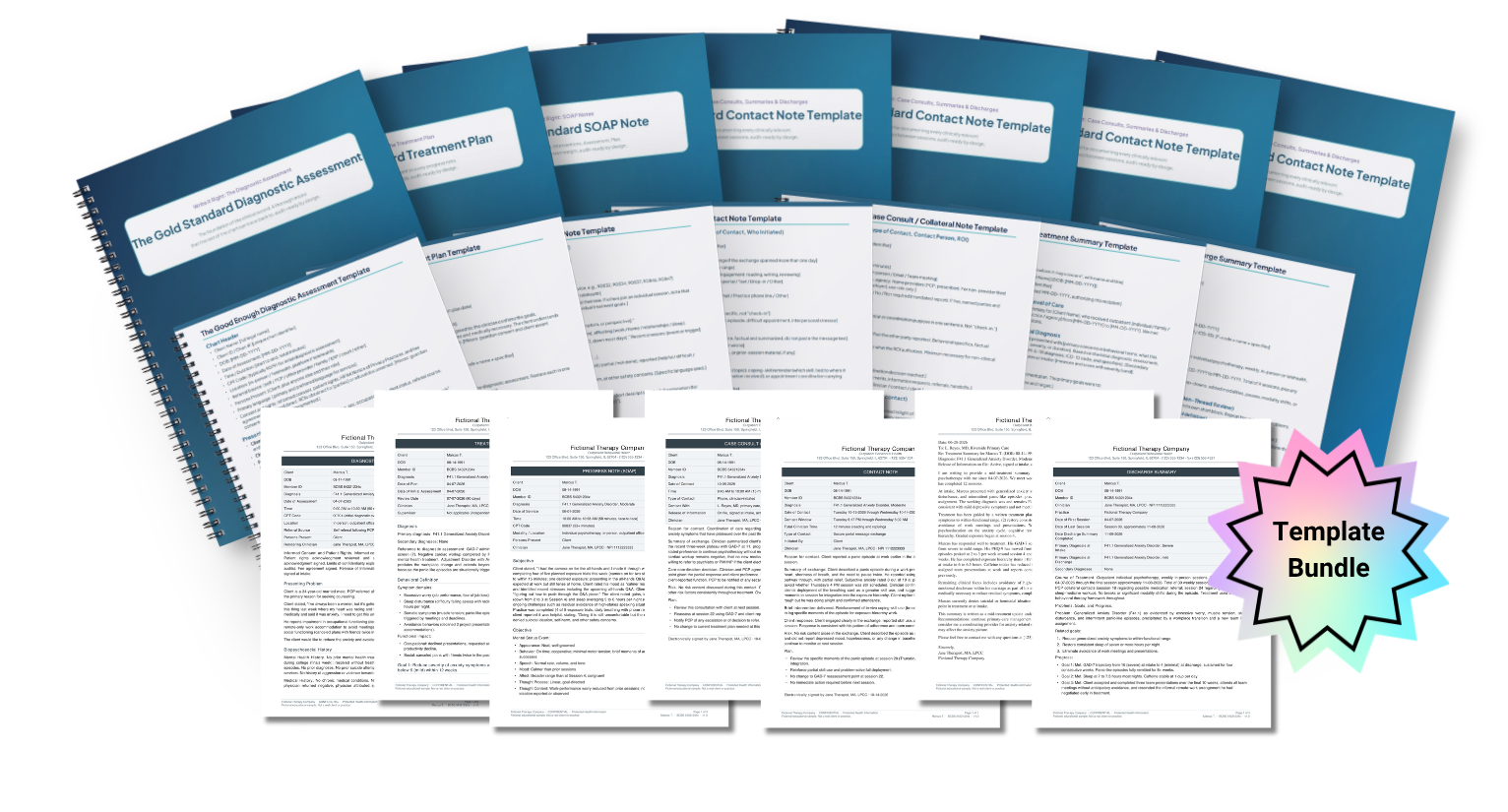
the case files above show you how each course teaches. enroll in a single course, or save by bundling all four.

Enroll →